← All this month’s guidesHTML guideMat version

AstroYoga · Kriyā on a chair

Āśleṣā

Finely illuminate the diaphragm-stomach area on one side, then on the other.

SupportTargetIntegration
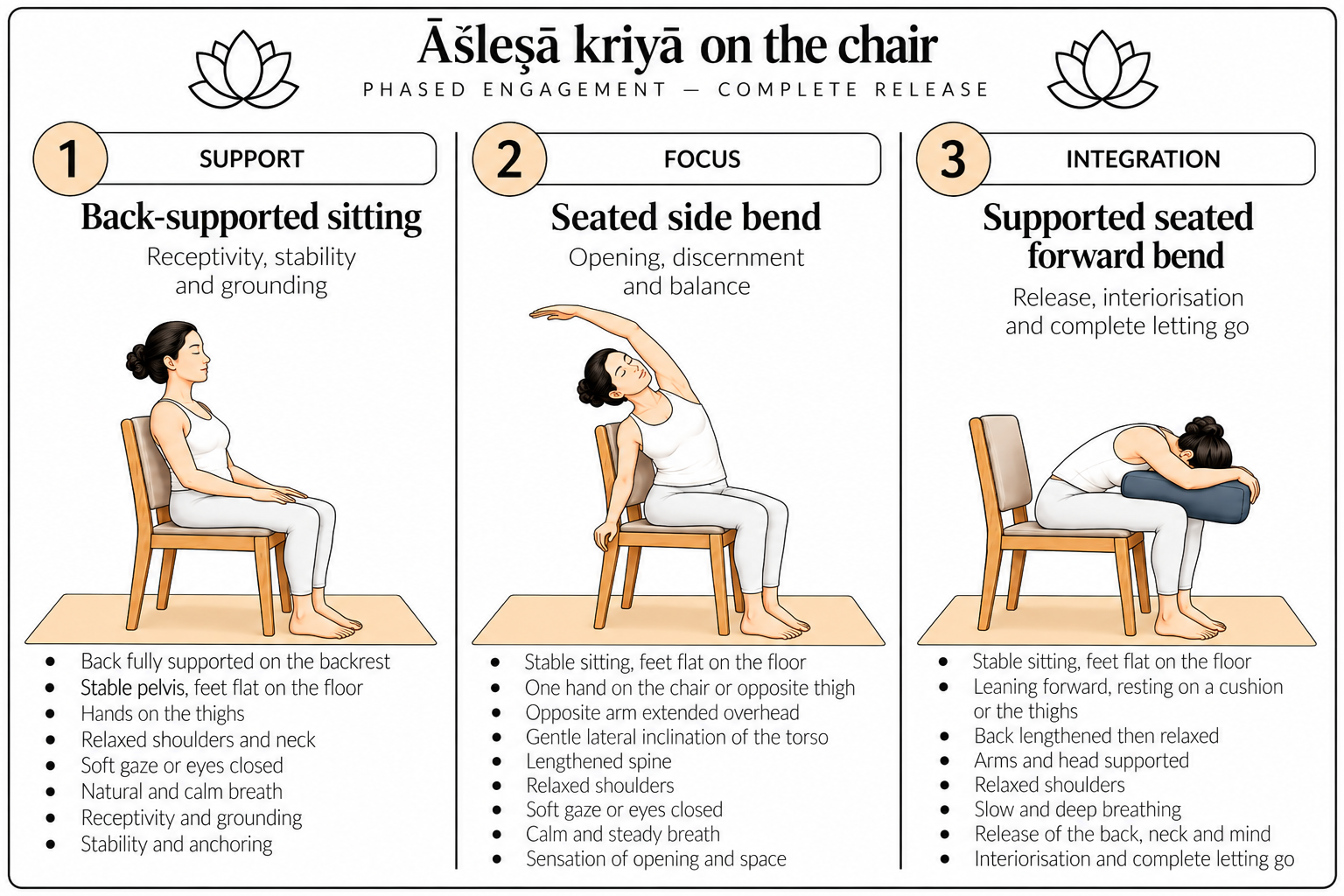
The three postures of the Āśleṣā kriyā on a chair
01

Support

Supported seated forward bend

Concrete purposeReduce surface noise and make the breath more inward.

1. Settle in

Sit in the middle of the chair. Slightly separate the feet. Ground the feet on the floor.

Incline the trunk forward from the hips. Place the forearms, hands, or forehead on a support. Let the pelvis become heavy.

2. Enter and hold

Release the shoulders. Calm the area beneath the ribs. Let the breathing become more discreet.

Breathe mainly into the back. Soften the diaphragm and upper abdomen. Withdraw surface effort.

Desired sensation

Sense a finer breath and a more perceptible center without contraction.

Success criterion

The pelvis remains heavy, the diaphragm softens, and attention gathers without hard effort.

Adaptations, exit and precautions

Simple variationRemain higher, with the forearms placed on the thighs.

Exiting the postureStraighten the trunk slowly. Return to the center. Wait for one breath before continuing.

Mistakes to avoidPushing the breath toward the abdomen. Collapsing into the chest. Trying already to undo the knot.

ContraindicationsSignificant reflux, respiratory discomfort in flexion, hip pain preventing the forward inclination.

02

Target

Pārśva Urdhva Hastasana on a chair

Seated lateral stretch

Concrete purposeFinely illuminate the diaphragm-stomach area on one side, then on the other.

1. Settle in

Sit in a stable position. Place the feet on the floor.

Raise one arm beside the ear on the inhalation. Keep the other hand on the edge of the chair if support is needed.

2. Enter and hold

Slightly incline the trunk to the opposite side. Keep the face supple. Keep the throat free. Remain in a moderate gesture.

Breathe into the flank and beneath the ribs on the open side. Let the diaphragm and upper stomach become more readable. Do not seek a large form.

Desired sensation

Sense a clearer pathway beneath the ribs and the beginning of softness around the diaphragm.

Success criterion

The pelvis remains stable, the shoulder does not lift, and the breath can enter the area without tension.

Adaptations, exit and precautions

Simple variationKeep the raised hand on the hip or raise the arm less high.

Exiting the postureReturn to the center on an inhalation. Allow one breath before changing sides.

Mistakes to avoidLifting the shoulder toward the ear. Crushing the opposite flank. Turning the gesture into a maximal stretch.

ContraindicationsShoulder pain when raising the arm, rib irritation, instability of the trunk in side bending.

03

Integration

Sama Sthiti seated

Equal seated posture

Concrete purposeLet the unveiling settle without returning to analysis.

1. Settle in

Return to the center of the chair. Place the feet parallel.

Place one hand on the lower sternum and the other on the upper abdomen, or both hands on the lower ribs. Gently lengthen the spine.

2. Enter and hold

Let the gaze settle forward or lower slightly. Stay quiet. Do not continue searching.

Let the breath become fine, penetrating, and calm. Feel the diaphragm loosening little by little. Let the center become simpler.

Desired sensation

Sense better continuity between breath, diaphragm, and upper abdomen.

Success criterion

The breath becomes finer, the chest does not harden, and the central area feels less coiled.

Adaptations, exit and precautions

Simple variationSimply place the hands on the thighs and keep the same quality of breath.

Exiting the postureRelease the hands. Return to a simple seated position. Wait for one breath before moving on to anything else.

Mistakes to avoidReturning to analysis. Wanting to deepen further. Hardening the chest or throat.

ContraindicationsLumbar discomfort in unsupported sitting, inner agitation increased by stillness.