← All this month’s guidesHTML guideChair version

AstroYoga · Kriyā on the mat · 13

Hasta

Shape the gesture by linking hands, arms, heart and center in a precise and manageable form.

SupportTargetIntegration
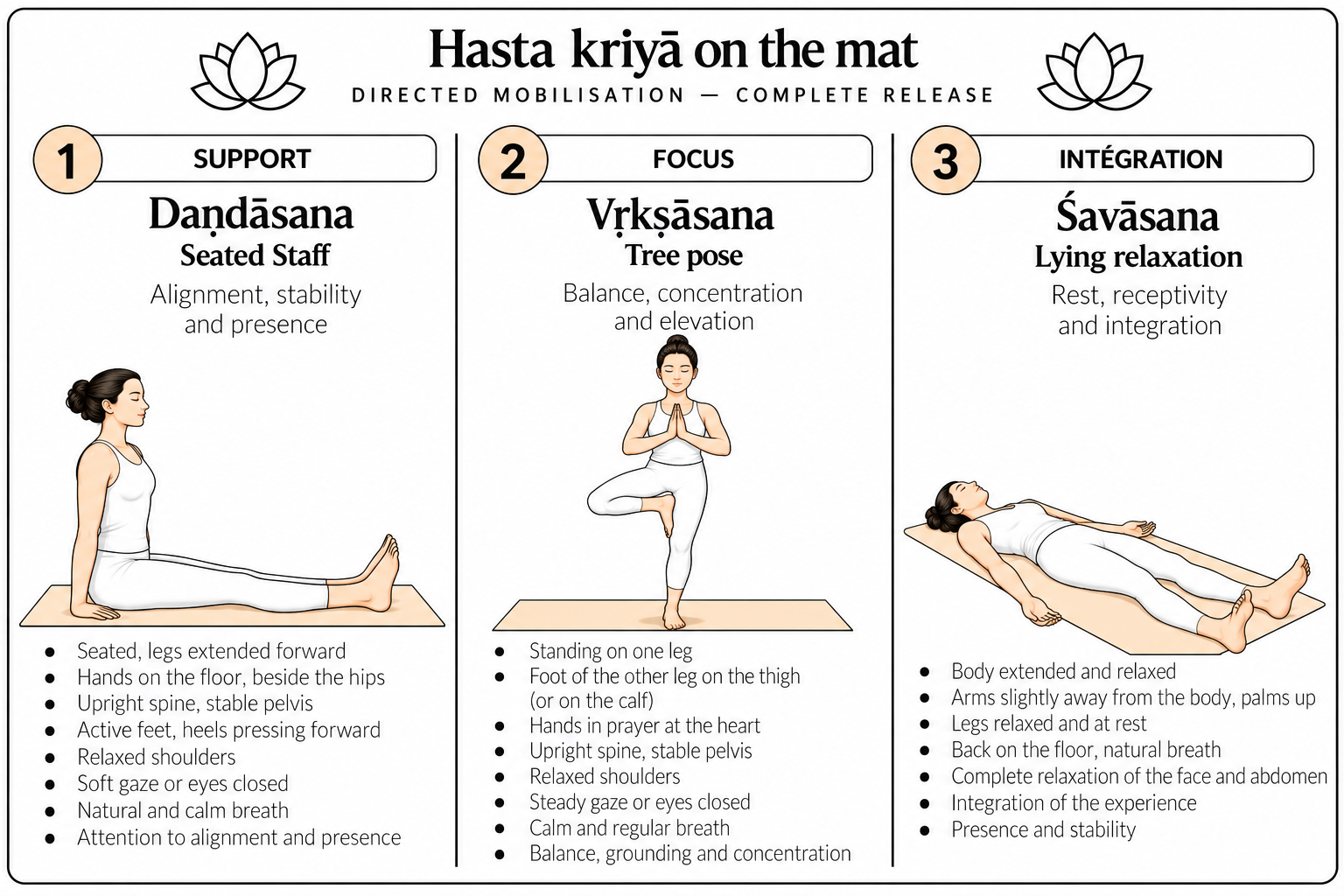
The three postures of the Hasta kriyā on the mat
01

Support

Garuḍāsana Arms

Eagle Arms

Concrete purposeRelease the shoulders, wrists and arms, then link the gesture to the breath.

1. Settle in

Stand upright or sit on the heels, according to the knees. Extend the arms in front of you.

Cross one arm over the other. Bend the elbows. Bring the forearms closer together until the palms or backs of the hands meet.

2. Enter and hold

Lift the elbows slightly to shoulder height. Broaden the back of the shoulder blades. Keep the chin slightly tucked. Lengthen the back of the neck.

Breathe into the upper back. Keep the throat free. Feel the shoulders, arms and wrists become more available.

Desired sensation

Feel the shoulders and wrists release, with a clearer pathway between arms, hands and breath.

Success criterion

The shoulders do not rise, the head does not move forward, and the breath enters the upper back more easily.

Adaptations, exit and precautions

Simple variationSimply cross the arms without bringing the forearms fully together.

Exiting the postureSlowly release the arms. Return to neutral. Change the crossing after one breath.

Mistakes to avoidLifting the shoulders. Tightening the throat. Letting the head move forward.

ContraindicationsAcute shoulder pain, elbow inflammation, cervical discomfort if the head moves forward.

02

Target

Phalakāsana

Plank

Concrete purposeShape the gesture by linking hands, arms, heart and center in a precise and manageable form.

1. Settle in

Come onto all fours. Place the hands under the shoulders. Spread the fingers. Anchor the toes.

Slightly press the floor away with the hands. Lengthen the back of the neck. Stabilize the abdomen without hardening it.

2. Enter and hold

Extend one leg behind you. Then extend the other. Align heels, pelvis, sternum and head in one line.

Press the floor away with the hands. Let the arms remain active without locking. Keep the heart linked to the center. Hold briefly, but clearly.

Desired sensation

Feel a clear line between hands, arms, heart and center, without brute effort.

Success criterion

The hands press clearly, the abdomen remains supported, and the form stays precise without excessive trembling.

Adaptations, exit and precautions

Simple variationKeep the knees on the floor while preserving the hands-shoulders-pelvis line.

Exiting the posturePlace one knee down, then the other. Return to all fours. Allow one resting breath.

Mistakes to avoidLetting the pelvis drop. Lifting the pelvis too high. Blocking the breath or hardening the jaw.

ContraindicationsSensitive wrists, shoulder pain, low back pain if the abdomen releases, significant fatigue in the hold.

03

Integration

Vajrāsana

Sitting on the Heels

Concrete purposeRelease the command and make the gesture simple, calm and available.

1. Settle in

Kneel down. Sit on the heels or on a support placed between the pelvis and heels.

Place the hands flat on the thighs, fingers released but alive. Straighten the spine without stiffness. Let the shoulders descend.

2. Enter and hold

Calm the face. Release the hands. Let the neck remain free.

Stop correcting constantly. Let the inner gesture simplify. Remain in calm presence.

Desired sensation

Feel the hands, arms and throat calmer, with less unnecessary command.

Success criterion

The fingers release, the shoulders descend, and the breath becomes simpler.

Adaptations, exit and precautions

Simple variationSit on a chair with the hands resting on the thighs.

Exiting the postureLean slightly forward. Release the legs. Return slowly.

Mistakes to avoidStiffening the back. Keeping the hands tense. Continuing to do inwardly.

ContraindicationsSensitive knees, painful ankles, difficulty sitting on the heels without support.