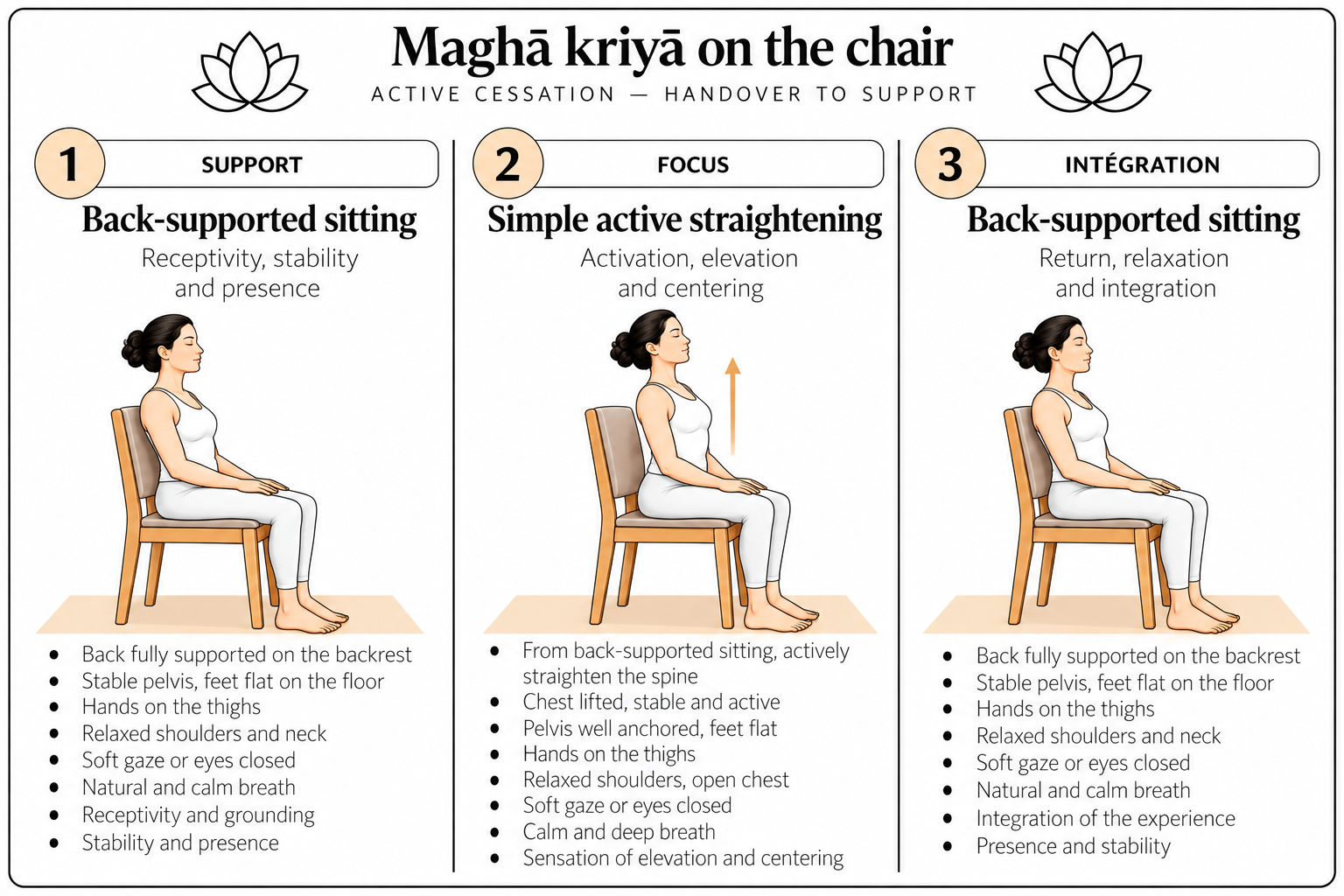
Support
Back-supported sitting
Concrete purposeDeliberately cease active action and let support take over without retaining unnecessary guarding tone.
1. Settle in
Sit with feet firmly grounded, then let the back meet the backrest over as broad a surface as is comfortable.
2. Enter and hold
Support — Back-supported sitting. Reduce the effort of holding the trunk and let the support truly carry part of the weight. The hands remain free, without gripping the chair.
Desired sensation
The movement is complete when the active effort identified initially can truly decrease because external support receives the load ; contact occurs without falling or impact ; breath, throat and neck remain free ; and exit requires only enough effort to leave support, without rebound or compensatory straightening.
Success criterion
The movement is complete when the active effort identified initially can truly decrease because external support receives the load ; contact occurs without falling or impact ; breath, throat and neck remain free ; and exit requires only enough effort to leave support, without rebound or compensatory straightening. The criterion is neither height, chest opening nor time spent in the supported posture.
Adaptations, exit and precautions
Simple variationReduce the range, keep more contact with the seat or backrest, or stay at the first stable stage. The variation must preserve the same grammar without turning the chair into a lever.
Mistakes to avoidContinuing to work when support should take over. Do not add a second intensification once the phase criterion is met.
Physical cautionsReduce or stop in case of pain, dizziness, numbness, increasing joint discomfort or lasting loss of comfortable breathing. No maximum range is sought. Check that the chair is stable, has no wheels and never becomes a pulling lever.