← All this month’s guidesHTML guideChair version

AstroYoga · Kriyā on the mat · 7

Punarvasu

Restore the chest and give space back to the diaphragm.

SupportTargetIntegration
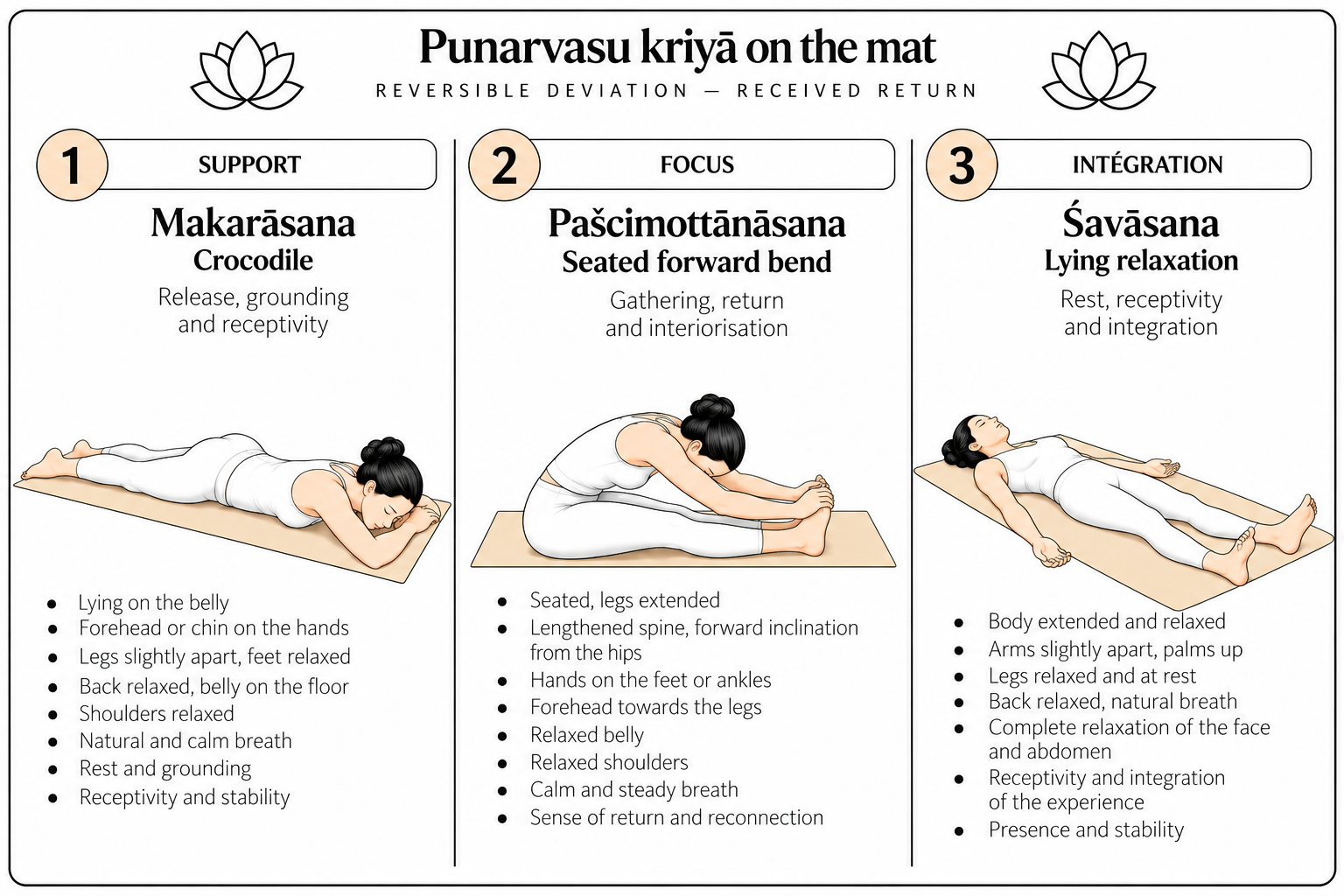
The three postures of the Punarvasu kriyā on the mat
01

Support

Adho Mukha Vīrāsana

Downward-Facing Hero

Concrete purposeReduce dispersion and restore posterior breathing.

1. Settle in

Kneel down. Move the pelvis back toward the heels. Separate the knees slightly if the breathing needs space.

Extend the arms forward. Place the forehead on the floor or on a support.

2. Enter and hold

Let the pelvis become heavy. Broaden the back. Unload the throat.

Breathe into the back, flanks and rear ribs. Let dispersion calm without shutting down.

Desired sensation

Feel the back breathe better, the shoulder blades less tight, and the whole body less dispersed.

Success criterion

Breathing returns into the back, the throat calms, and the body gathers without closing.

Adaptations, exit and precautions

Simple variationPlace a support under the forehead or between the pelvis and heels.

Exiting the postureReturn slowly. Straighten the trunk. Allow one calm breath.

Mistakes to avoidClosing completely. Collapsing. Coming out too soon.

ContraindicationsAcute knee pain, respiratory discomfort if the posture is too closed, strong limitation in knee flexion.

02

Target

Setu Bandha Sarvāṅgāsana Supported

Supported Half Bridge

Concrete purposeRestore the chest and give space back to the diaphragm.

1. Settle in

Lie down on the back. Bend the knees. Place the feet hip-width apart.

Lift the pelvis slightly. Slide a block or support under the sacrum. Let the weight rest on the support.

2. Enter and hold

Let the sternum open gently toward the chin. Keep the throat free. Place the arms on the floor.

Do not push further. Let the chest and diaphragm reoccupy the breath. Remain without excessive muscular effort.

Desired sensation

Feel the chest more inhabited, the diaphragm freer, and the breath more centered.

Success criterion

The sternum remains open without effort, the breath becomes more regular, and the upper abdomen does not harden.

Adaptations, exit and precautions

Simple variationUse a lower support or keep the pelvis on the floor with a small chest opening.

Exiting the postureLift the pelvis slightly. Remove the support. Lower the pelvis slowly to the floor.

Mistakes to avoidRising too high. Compressing the throat. Seeking unnecessary muscular holding.

ContraindicationsCervical pain, lumbar discomfort without proper support, excessive tension if the opening is too large.

03

Integration

Supta Baddha Koṇāsana Supported

Supported Bound Angle

Concrete purposeUnify the restoration and stabilize the inner return.

1. Settle in

Lie down on an inclined support or on the floor. Bring the soles of the feet together. Support the knees.

Open the arms slightly or place the hands on the lower ribs.

2. Enter and hold

Let the abdomen, diaphragm and chest settle without collapsing. Keep the throat neutral.

Breathe in a regular, even and enveloping way. Let the return settle deeply.

Desired sensation

Feel a quiet return into the chest, with more continuity between throat, diaphragm and heart.

Success criterion

The breath becomes full and regular, the chest remains open, and the body does not collapse.

Adaptations, exit and precautions

Simple variationExtend the legs or move the feet farther away from the pelvis.

Exiting the postureGently close the knees. Roll onto one side. Slowly sit back up.

Mistakes to avoidCollapsing into the opening. Seeking too much amplitude. Confusing restoration with softness.

ContraindicationsHip discomfort without support, lumbar discomfort in opening, pregnancy depending on the chosen set-up.