← All this month’s guidesHTML guideMat version

AstroYoga · Kriyā on a chair

Puṣya

Receive at the heart, then let the movement descend into the lungs and stomach.

SupportTargetIntegration
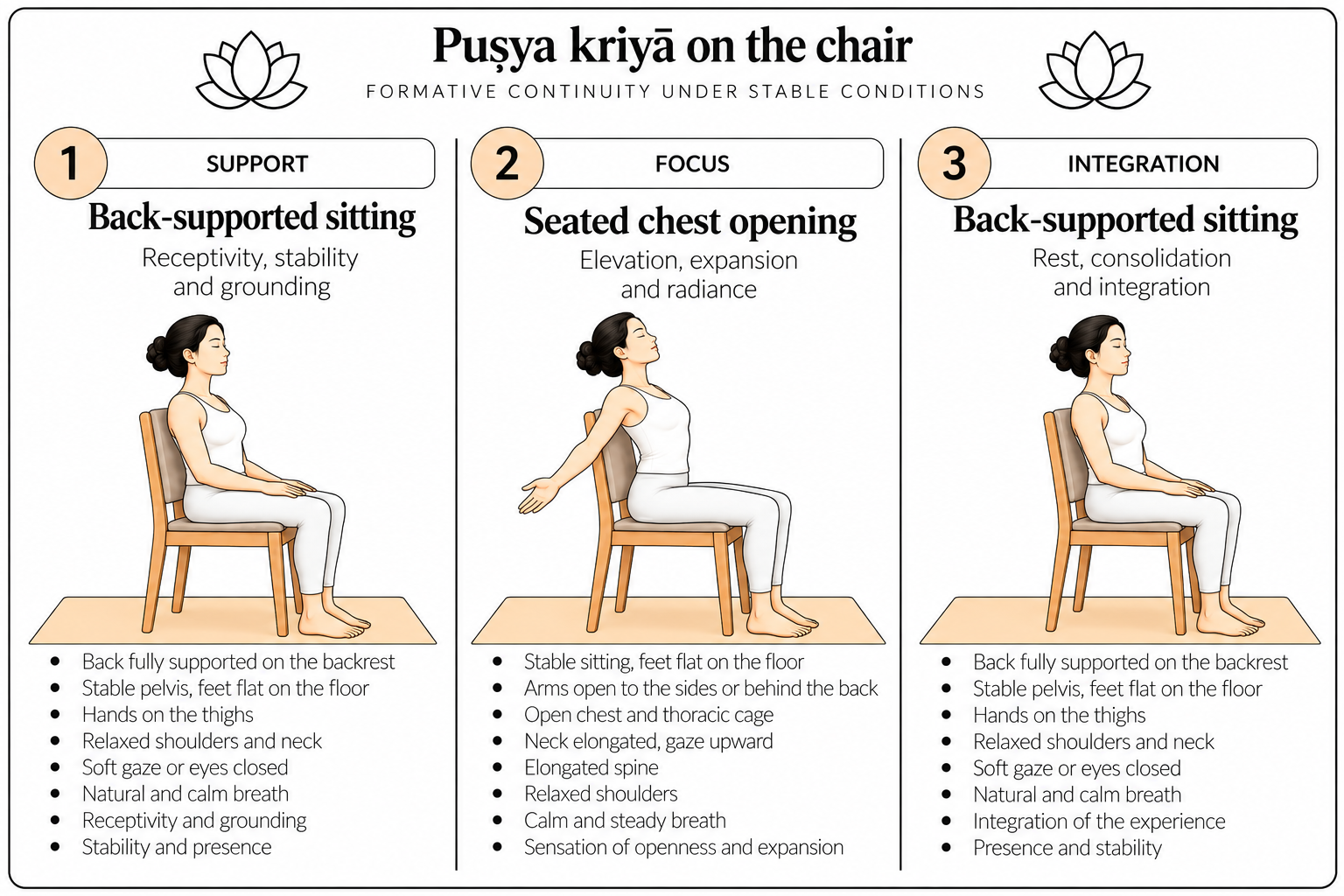
The three postures of the Puṣya kriyā on a chair
01

Support

Supported seated opening

Concrete purposeMake the chest, ribs, and stomach available to reception without exposing them.

1. Settle in

Sit at the back of the chair. Place a small cushion or support behind the upper back if possible.

Slightly open the knees. Place the feet firmly on the floor. Place the hands on the lower ribs or on the sternum.

2. Enter and hold

Let the sternum lift very slightly. Keep the throat free of tension. Choose a simple opening.

Breathe in a soft, stable, and enveloping way. Connect the inhalation to the chest and the exhalation to the stomach and upper abdomen.

Desired sensation

Sense the chest, ribs, and stomach becoming more receptive without agitation.

Success criterion

The opening remains moderate, the throat does not harden, and the breath connects chest and upper abdomen.

Adaptations, exit and precautions

Simple variationRemain more upright, without back support, with the hands on the ribs.

Exiting the postureReturn to a neutral seated position. Release the hands. Allow one calm breath.

Mistakes to avoidCreating too marked an opening. Hardening the throat. Letting agitation increase.

ContraindicationsBack discomfort without support, thoracic discomfort if the opening is too marked, agitation increased by an overly open position.

02

Target

Seated heart opening

Concrete purposeReceive at the heart, then let the movement descend into the lungs and stomach.

1. Settle in

Sit toward the front of the chair. Ground the feet.

Place the hands on the thighs, hips, or backrest. Lengthen the back of the neck.

2. Enter and hold

On a soft and stable inhalation, lift the sternum. Broaden the collarbones. Let the heart move forward without stiffness.

Keep the throat free. Let the shoulders descend. Remain in a stable and benevolent reception.

Desired sensation

Sense a gentle opening of the heart descending into the lungs and stomach.

Success criterion

The sternum opens without stiffness, the shoulders descend, and the exhalation does not break the opening.

Adaptations, exit and precautions

Simple variationKeep the hands on the thighs and open only the sternum.

Exiting the postureReturn slowly without losing the axis. Release the shoulders. Allow one calm breath.

Mistakes to avoidSeeking a large extension. Hardening the heart or the throat. Turning the posture into a performance.

ContraindicationsNeck pain, back pain in opening, significant fatigue if the posture becomes too demanding.

03

Integration

Supported seated forward bend

Concrete purposeTransform reception into stable assimilation.

1. Settle in

Return to the middle of the chair. Slightly separate the feet.

Incline the trunk forward from the hips. Place the forearms, hands, or forehead on a support.

2. Enter and hold

Let the pelvis become heavy. Let the back ribs breathe. Calm the chest without closing it.

Slightly lengthen the exhalation. Let the heart, lungs, and stomach enter one calm rhythm.

Desired sensation

Sense the reception settling and becoming calm assimilation.

Success criterion

The trunk remains supported, the exhalation lengthens slightly, and the opening becomes habitable.

Adaptations, exit and precautions

Simple variationPlace only the forearms on the thighs.

Exiting the postureStraighten the trunk slowly. Return to a simple seated position. Allow one resting breath.

Mistakes to avoidEmptying abruptly on the exhalation. Collapsing into the chest. Closing the opening too quickly.

ContraindicationsSignificant reflux, respiratory discomfort in flexion, hip pain preventing the forward inclination.