← All this month’s guidesHTML guideMat version

AstroYoga · Kriyā on a chair · 15

Svātī

Deploy a clear trajectory from the flanks, kidneys, and center.

SupportTargetIntegration
The three postures of the Svātī kriyā on a chair
01

Support

Apānāsana on a chair

Centered seated fold

Concrete purposeFirst gather the field and give the lateral lines a clearer breath.

1. Settle in

Sit in the middle of the chair. Ground the feet. Slightly separate the feet.

Incline the trunk forward from the hips. Place the forearms, hands, or forehead on a support.

2. Enter and hold

Let the pelvis remain heavy. Lengthen the flanks. Unload the kidneys without collapsing.

Breathe into the back and the flanks. Remain simple. Do not yet seek to deploy the impulse.

Desired sensation

Sense the lateral lines breathing more clearly and the field gathering.

Success criterion

The pelvis remains heavy, the flanks lengthen, and the breath enters the back more fully.

Adaptations, exit and precautions

Simple variationPlace only the forearms on the thighs.

Exiting the postureStraighten the trunk slowly. Return to the center. Allow one calm breath.

Mistakes to avoidCollapsing into the thorax. Creating too strong a forward bend. Already seeking the trajectory.

ContraindicationsSignificant reflux, respiratory discomfort in flexion, hip pain preventing the forward inclination.

02

Target

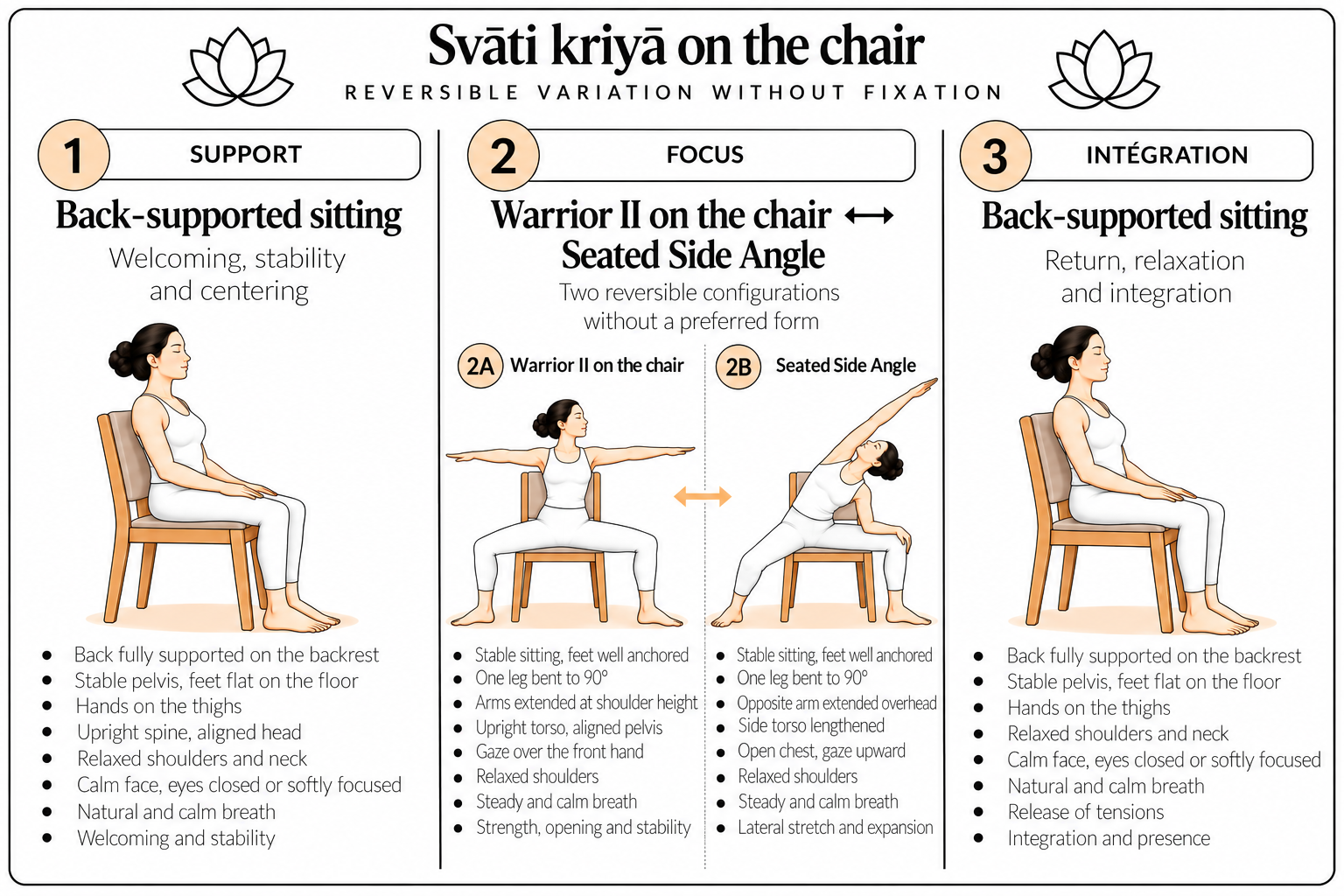
Pārśva Urdhva Hastasana on a chair

Directed seated lateral stretch

Concrete purposeDeploy a clear trajectory from the flanks, kidneys, and center.

1. Settle in

Sit in a stable position. Place the feet on the floor.

Raise one arm beside the ear on the inhalation. Keep the other hand on the edge of the chair if needed.

2. Enter and hold

Moderately incline the trunk to one side. Place the forearm on the thigh or on a support. Extend the other arm in continuity if this remains simple.

Keep the flanks active. Let the trajectory remain clear. Do not let the movement scatter.

Desired sensation

Sense a clear, centered, and governed lateral impulse.

Success criterion

The feet remain grounded, the trunk does not collapse, and the shoulder of the raised arm does not lift.

Adaptations, exit and precautions

Simple variationKeep the upper hand on the hip and reduce the inclination.

Exiting the postureReturn to the center on an inhalation. Release the arms. Change sides after one breath.

Mistakes to avoidCollapsing into the inclined side. Losing the support of the feet. Lifting the shoulder of the raised arm.

ContraindicationsHip pain, low back pain if the trunk collapses, sensitive shoulder in the raised arm, seated instability.

03

Integration

Sama Sthiti seated

Equal seated posture

Concrete purposeSlow down without breaking the impulse and keep it recentred.

1. Settle in

Sit in the center of the chair. Place the feet parallel.

Place the hands on the thighs or on the lower flanks. Gently lengthen the spine.

2. Enter and hold

Let the shoulders descend. Soothe the throat. Set the gaze forward.

Let the breath remain mobile but calmer. Stabilize the center and the kidneys. Do not relaunch the impulse.

Desired sensation

Sense the will remaining present, but calmer and more centered.

Success criterion

The breath remains mobile without agitation, the kidneys calm down, and attention no longer scatters.

Adaptations, exit and precautions

Simple variationLean slightly against the backrest.

Exiting the postureRelease the hands. Return to a neutral seated position.

Mistakes to avoidCollapsing after the effort. Stiffening the back. Letting attention scatter again in all directions.

ContraindicationsLumbar discomfort in unsupported sitting, fatigue preventing simple uprightness.