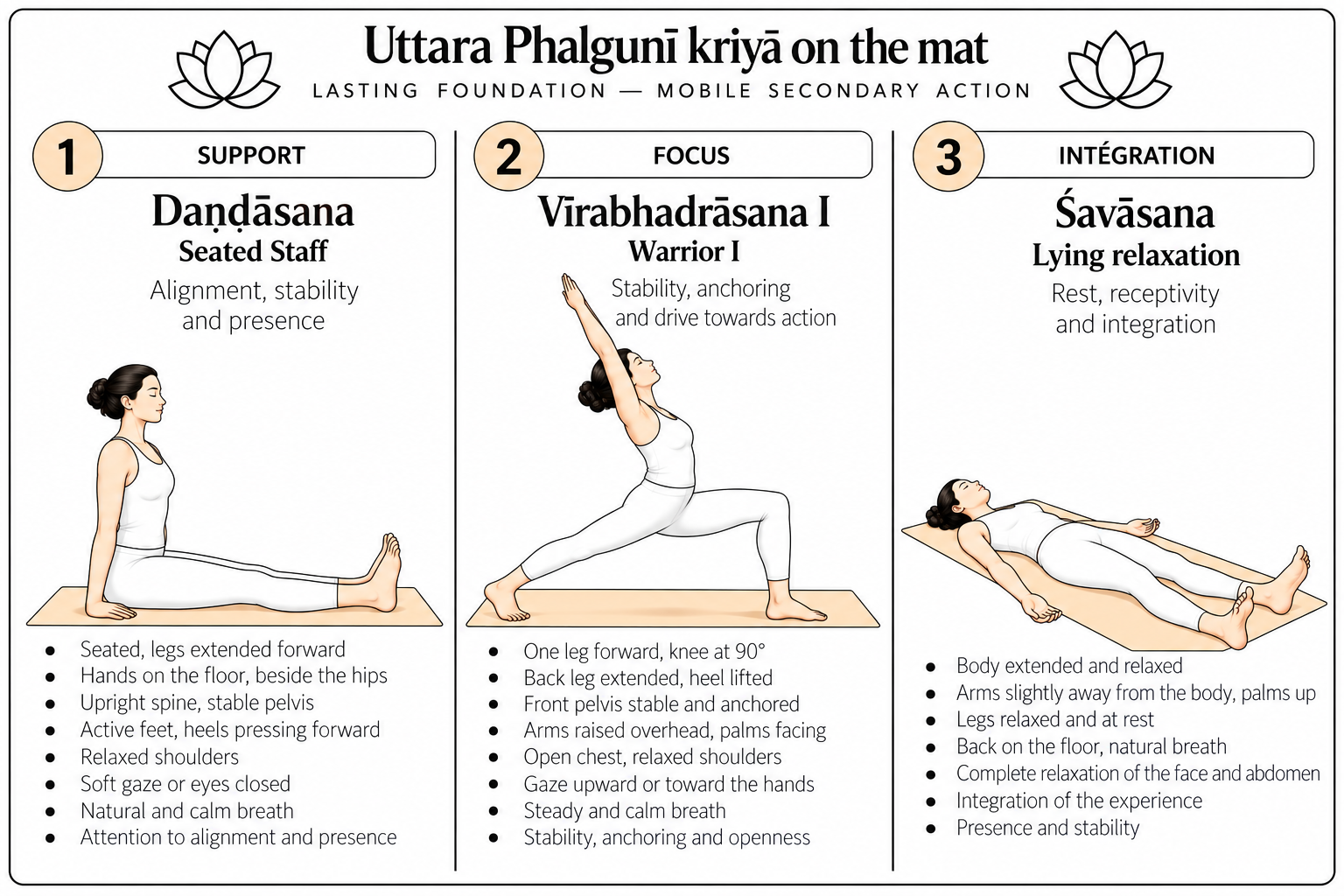
Support
Daṇḍāsana
Seated StaffConcrete purposeKeep a lasting foundation while a secondary action moves, then return without disturbing the basic organisation.
1. Settle in
Sit with legs extended in front, clear support on sitting bones, spine upright and hands on the floor or thighs without unnecessary pushing.
2. Enter and hold
Support — Daṇḍāsana — Seated Staff. Establish a firm sitting base that allows breathing. Keep the legs just active enough to support the axis without stiffening the face or shoulders.
Desired sensation
The movement is complete when the base remains clearly recognisable during a simple peripheral action without extra correction ; breath, face and throat remain ordinary ; the periphery can return to neutral without losing organisation ; and the whole posture can then be left without needing to hold it to demonstrate its stability.
Success criterion
The movement is complete when the base remains clearly recognisable during a simple peripheral action without extra correction ; breath, face and throat remain ordinary ; the periphery can return to neutral without losing organisation ; and the whole posture can then be left without needing to hold it to demonstrate its stability. The criterion is neither duration, lunge depth nor arm height. One clean peripheral action is enough.
Adaptations, exit and precautions
Simple variationReduce range or duration and return to the last form in which support, breath and return remain simple. The reduced version preserves the same operative logic.
Mistakes to avoidStiffening the base to allow peripheral movement. Do not add a second intensification once the phase criterion is met.
Physical cautionsReduce or stop in case of pain, dizziness, numbness, increasing joint discomfort or lasting loss of comfortable breathing. No maximum range is sought. Prioritise balance and stable supports ; reduce range before losing control of return.